
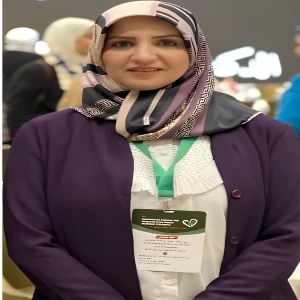
Adraa Hussein Shawq
university of Baghdad, IraqPresentation Title:
The role of pediatric nurse in family self-management in management chronic childhood illness: Mixed method study
Abstract
Background: Family self-management is one of the cornerstones in providing optimal health outcomes in children with chronic illness. Incorporating with pediatric nurse who carried out to strength caregiver`s competence, empirical evidence detailing the specific mechanisms by which they facilitate self-management across diverse healthcare settings remains limited. Purpose: This mixed-methods study aimed to examine the contributions of pediatric nurses to enhancing family self-management, exploring both measurable outcomes and the lived experiences of families and nurses.
Methods: A convergent parallel mixed-methods design was utilized, with data collected and analyzed concurrently before integration. The quantitative sample included 210 caregivers of children with chronic illnesses and 85 pediatric nurses. Validated scales assessed nurse support, self-management behaviors, and caregiver confidence. Qualitative data were obtained through semi-structured interviews with 20 caregivers and 15 pediatric nurses.
Results: Quantitative findings demonstrated that high nurse-family communication quality significantly predicted higher caregiver self management scores (β= .47, p < .001). Nurses reporting structured education practices were associated with families exhibiting significantly better adherence to care routines (p = .002). Qualitative analysis revealed four keys, intertwined facilitative roles: Educator, Emotional Supporter, Care Coordinator, and Advocate. Families experientially captured this multidimensional support, describing nurses as the bridge between the medical world and home care.
Discussion: The integration of nurse-led teaching, emotional support, care coordination, and advocacy significantly enhances family competence and health outcomes. The qualitative themes explain the quantitative relationships by showing how nurse-patient relationships translate into improved knowledge, reduced stress, and strengthened adherence.
Conclusion: Pediatric nurses serve as crucial, multidimensional facilitators of family selfmanagement in chronic childhood illness.
Biography
Adraa H. Shawq is a distinguished faculty member in the Pediatric Nursing Department at the University of Baghdad, bringing 20 years of dedication to the College of Nursing. She holds a Ph.D. in Pediatric Nursing and is a passionate advocate for child health improvement research. Her primary interests focus on evidence-based strategies for pain management and the implementation of atraumatic care principles in pediatric settings. Dr. Shawq's clinical and academic work is centered on ensuring that nursing practice is grounded in minimizing distress and maximizing comfort for children and their families during critical health phases. She is committed to advancing the interdisciplinary approach required for holistic pediatric care. Responsibility: Course directorate at Pediatric Nursing Department 2016- 2019. Head person of exam committee\ college of nursing 2019- 2021. Head person of the pediatric nursing department 2021-2023. member of faculty promotions committee 2024-now. Head of the graduation projects committee.

Organization Location
1309 Coffeen Avenue, STE 1200, Sheridan, Wyoming 82801, USA
General Enquiry
contact@scientexconferences.com
Finance Enquiry
finance@scientexconferences.com
Call us at
USA : +1(341) 208-2748