
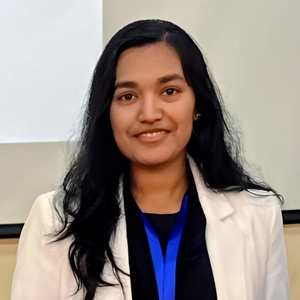
Divya Ravikumar
Medeor Hospital Abudhabi, United Arab EmiratesPresentation Title:
Hemoglobinopathies in neonates with intrauterine growth restriction: Frequency and clinical implications
Abstract
Background & Objectives: Hemoglobinopathies represent a major global cause of pediatric morbidity, yet their role and prevalence in neonates with intrauterine growth restriction (IUGR) remain underexplored. Globin chain abnormalities and altered fetal hemoglobin dynamics may aggravate intrauterine tissue hypoxia. This study aimed to evaluate the frequency, diagnostic spectrum, and clinical implications of hereditary hemoglobin disorders in newborns presenting with IUGR.
Methods: A prospective comparative study was conducted involving 103 term neonates with IUGR(Main Group: 50 symmetrical, 53 asymmetrical) and 50 healthy term controls (Control Group). Umbilical cord blood samples were analyzed for fetal hemoglobin (HbF) and adult hemoglobin fractions (HbA1, HbA2) using Isoelectric Focusing (IEF), Capillary Electrophoresis (CE), and High-Performance Liquid Chromatography (HPLC). Diagnostic confirmations and phenotyping were completed via longitudinal follow-up at 6 months of age. Statistical significance was set at p < 0.05.
Results: At birth, IUGR neonates demonstrated significantly lower cord blood Hb F levels (40.7+0.4%vs. 64.8+0.8%, p < 0.001) and significantly higher HbA1 (59.3+0.4%vs. 35.3+0.8%, p<0.001) and HbA2 (0.107+0.010% vs. 0.038+0.001%, p < 0.001) compared to controls. By6months, hereditary hemoglobinopathies were diagnosed in 16 IUGR infants (15.5%)compared to 2 control infants (4.0%). Confirmed cases in the IUGR cohort included heterozygous beta-thalassemia (7.77%$, n = 8), heterozygous alpha-thalassemia (2.91%, n=3), sickle cell trait (1.94%, n = 2), homozygous beta-thalassemia (1.94%, n =2), and compound heterozygous beta-thalassemia/sickle cell disease (0.97%, n = 1). Symmetrical IUGR cases demonstrated a higher overall gene frequency of hemoglobin disorders than a symmetrical cases.
Conclusions: Neonates with IUGR exhibit a significantly higher frequency of hemoglobinopathies and distinct shifts in hemoglobin fractions at birth. Reduced HbF levels likely exacerbate fetal hypoxia and contribute to fetal growth restriction. These findings highlight the critical need for early neonatal screening and genetic counseling in growth-restricted infants, particularly in endemic regions.
Biography
Divya Ravikumar has completed her MBBS degree from Azerbaijan Medical University. She is currently completing her internship at Medeor Hospital (Burjeel Holdings) Abudhabi. Demonstrating a early commitment to clinical excellence and academic scholarship, she has authored and peer-reviewed research spanning pediatric surgery, orthopedics, cardiology, and perioperative sustainability, including work published in the Cureus Journal of Medical Science. Her professional work bridges patient-centered clinical care, evidence-based research, and sustainable practices in surgical healthcare.

Organization Location
1309 Coffeen Avenue, STE 1200, Sheridan, Wyoming 82801, USA
General Enquiry
contact@scientexconferences.com
Finance Enquiry
finance@scientexconferences.com
Call us at
USA : +1(341) 208-2748